Slab pumping in Amarillo
Footings, grade beams, stem walls and slabs, placed by boom or line pump. Send the pour once; local operators quote you directly.
We’re a quote-request service, not a pump company. Independent operators quote and book the work with you.
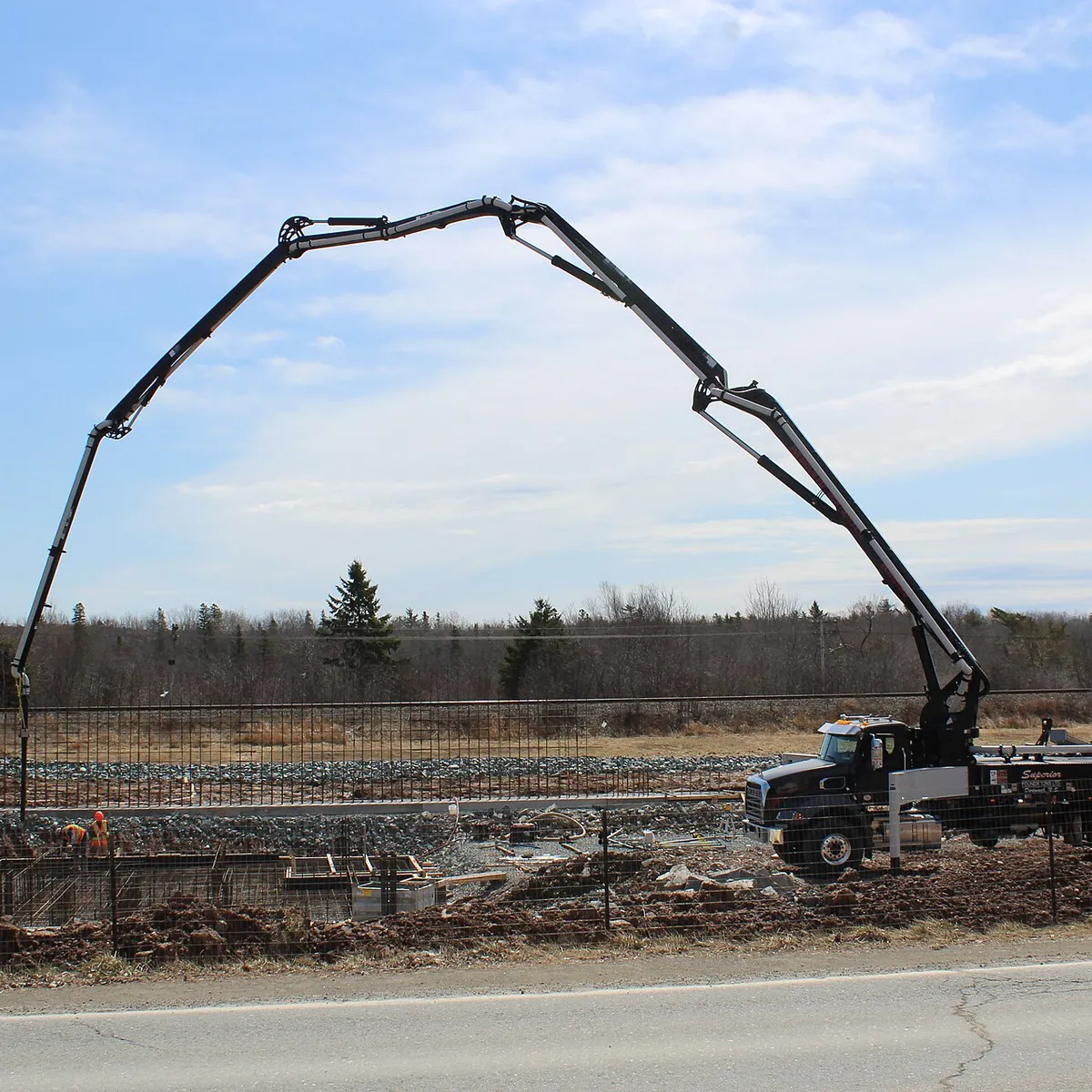
Pours this covers
Foundation work is where most pump requests start: the concrete is going into forms the mixer truck can’t get beside. A pump puts it where it is needed, and your crew places, vibrates and finishes it.
Typical buyers are homebuilders, foundation contractors, commercial general contractors, and the people building shops and barns.
What gets pumped
- Footings, grade beams and stem walls
- Piers
- Slabs on grade and shop floors
- Post-tension slabs, pumped like any other slab
- Driveways behind houses
Boom or line for a slab
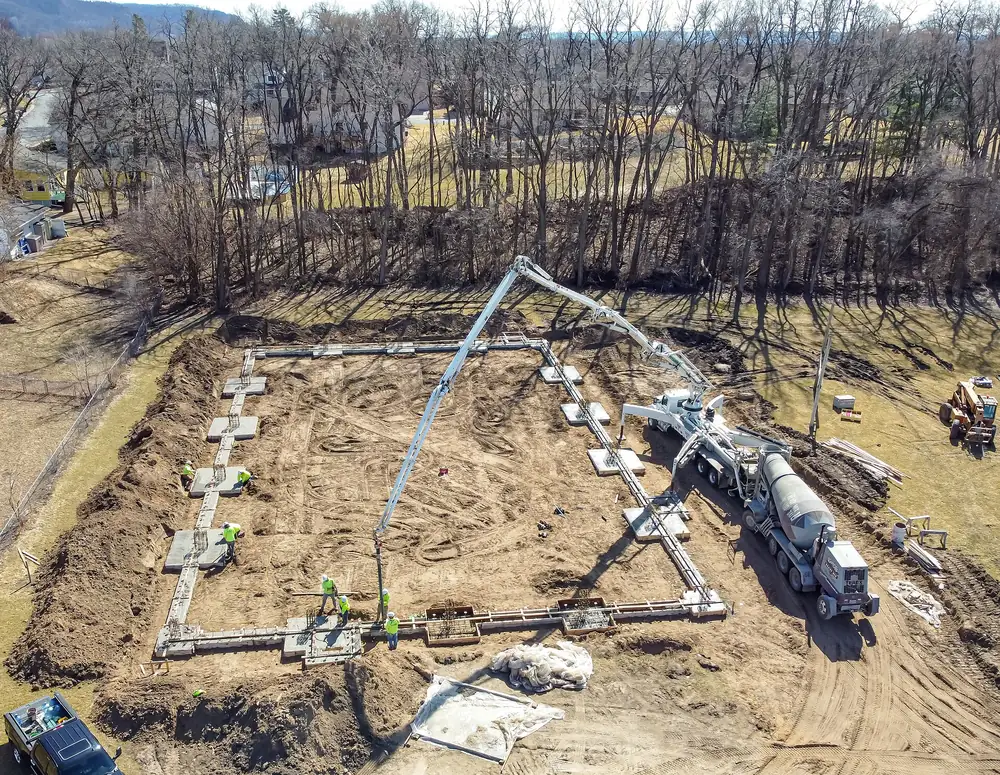
A boom pump reaches over the house or across the whole slab from one setup, so nothing is dragged over the steel. It is the usual choice when the slab sits behind a house or well back from the street.
A line pump lays hose on the ground and your crew carries it across the rebar. That is slower, but it works where a boom truck can’t set up: tight lots, low headroom, small pours. The reach finder below gives a rough boom size for your distance.
How much boom do you need?
Pace it out from where the truck can park to the far edge of the pour, then set the height. You get a rough boom size, and one click puts the reach on your quote request.
Rough guide only. Real reach depends on the pump model, where it can set up and the room its outriggers need. The operator confirms it.
About a 32 m boom
A 32 m class boom reaches about 92 ft out from its turret. Leave room beside the truck for the outriggers.
How a pour day runs
Your GC or foundation lead coordinates it. The pump is one link in the chain, so it helps to know the order.
-
Forms and steel are inspected and approved before the first truck is batched. A pump booked for a pour that fails inspection still bills.
-
The operator sets up, checks the line or boom, and primes it before the first mixer arrives.
-
Mixers back up to the hopper in turn. The spacing of trucks sets the real pace, more than the pump does.
-
The finishing crew works at the pace the concrete arrives. When the last load is placed, the pump is flushed out at the agreed washout spot.
Heat and wind in the Panhandle
This is general guidance, not a forecast. Open country and summer sun both speed up concrete and the day around it.
- Set timeHeat and wind dry the surface and make concrete set faster. Plan the finishing crew for that pace, not an average day.
- MixTalk to the batch plant about the mix for the weather. Don’t add water on site to buy time.
- Start timeAn early start gives your crew more working hours before the hottest part of the day.
- Wind and the boomLonger booms are more affected by wind, and the operator decides on the day. Ask about rescheduling terms when you book.
Permits and site rules
- Building permits and inspections for the work belong to the project. Using a pump doesn’t change them.
- If the truck has to set up on a street or block a lane, ask the City of Amarillo, or the town you’re working in, whether a street-use or traffic-control permit applies.
- Texas 811 locates are for excavation. If footings, piers or grade beams still need digging, whoever digs calls first; setting a pump on the surface is not digging.
- Keep the boom well clear of overhead power lines. The operator decides the setup and can refuse a spot that’s too close.
- If your GC or owner requires a certificate of insurance on site, ask the operator for it when you book.
Foundation and slab questions
How many yards of concrete does my slab need?
Multiply length by width by thickness, all in feet, and divide by 27 to get cubic yards. A 30 ft by 40 ft slab, 4 in thick, is 30 × 40 × 0.33 ÷ 27, about 15 cubic yards. Add a margin for waste and uneven subgrade, and tell the operator the number you’ll order.
What size boom does a house slab need?
It depends on how far the far edge is from where the truck can park, and whether the pour is over a house. Booms in the 28 to 32 m class are often used for house foundations and slabs set back from the street. The reach finder gives a starting point, and the operator confirms it.
Can a pump reach over a house?
Often, yes. A boom can place concrete in a backyard from the street, with the size set by how far back the pour goes and how tall the house is. Send both measurements. A line pump can also reach by hose where a boom can’t.
How long does a slab pour take?
It depends on the yards, how fast the mixers arrive and how quickly the finishing crew works. Truck spacing usually sets the pace more than the pump. Give the operator the yards and the truck schedule and they can estimate pump time.
Do I need a permit to use a pump?
The permits and inspections for the foundation belong to the project, and a pump doesn’t change them. If the truck sets up on a public street, ask the city or town whether a street-use or traffic-control permit applies.
Do I need to call 811 for a slab pour?
Texas 811 is for digging. If footings, piers or trenches still need excavating, whoever digs needs a locate first. Setting a pump on the surface is not digging, but check for overhead power lines before choosing the setup spot.
Send the slab pour
The form is set to a foundation and slab pour. Add the town, yards, reach and date, and operators who cover the site reply with a quote.
We pass your request to independent local operators who quote you directly. We don’t own pumps or do the work.